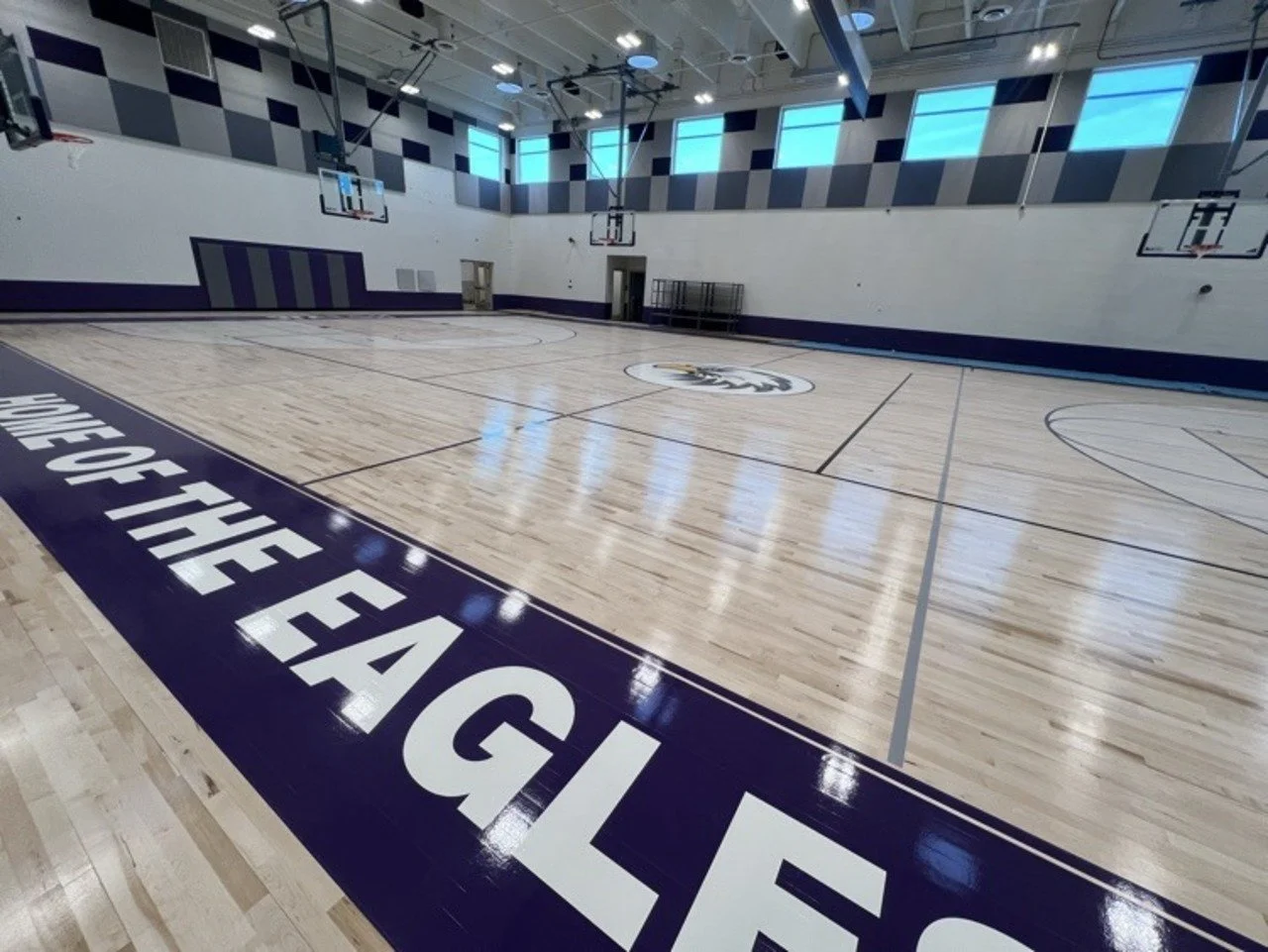
At Walsh High School, we programmed and refined the control experience for the Auxiliary and Competition Gymnasiums. While the physical AV systems were installed by our client Stadcomm, our role was to ensure the rooms actually worked for the people who use them every day.
The challenge was in the complexity of the systems. These spaces must support athletic competitions, assemblies, performances, movie nights, guest speakers, and community events. The users range from coaches and teachers to students and visiting announcers.
In the Auxiliary Gym, we created clearly defined operational modes that align with how the space is actually used. A teacher running a simple assembly should not have to think like an audio technician. A student group hosting a performance should be able to transition into a more advanced setup without reprogramming the room. A gym instructor should be able to play music for class without navigating theatrical controls.
By structuring the interface around these real-world scenarios, we reduced friction and eliminated guesswork. The system guides users toward the appropriate level of control for the event at hand, protecting more advanced configurations from accidental changes while keeping everyday tasks intuitive.
In the Competition Gym, the primary challenge was balancing game-day flexibility with operational consistency. Announcers need control at the scorer’s table. Administrators need reliable system startup and shutdown behavior. Staff need confidence that emergency pages will override local audio automatically. Rather than overwhelming operators with options, we organized the controls to prioritize clarity, fast access, and predictable behavior.
Across both spaces, we emphasized reliability and long-term maintainability. Remote monitoring capabilities, protected service functions, and a structured refinement period after first use ensured the system could evolve with the school’s needs without becoming unstable or overly complicated.
Walsh High School Gyms
Client:
Stadcomm