

The Carousel and Train are two of the most visible attractions at Denver Zoo—high-traffic, family-centered experiences that must balance delight, mission-focused interpretation, operational efficiency, and safety.
While both projects appear simple on the surface, each required thoughtful system redesign to integrate into the zoo’s broader infrastructure while improving reliability and guest engagement.
Conservation Carousel
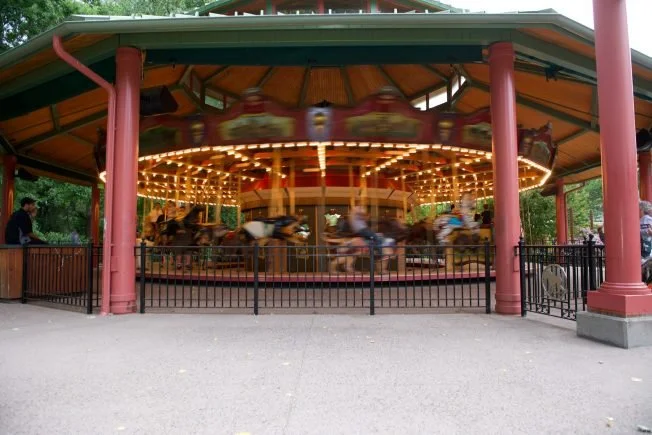
The existing carousel audio system consisted of a standalone mixer, a microphone input, and an iPod playlist—functional but isolated from the zoo’s larger operational ecosystem.
We replaced this configuration with a Q-SYS–based system fully integrated into the park-wide network. The former iPod playlist was replaced with a centrally managed Q-SYS playlist, controlled from an iPad used by attractions staff. This shift allows operations managers to curate and standardize programming across the park—preventing ad hoc playlist changes while enabling seamless synchronization with seasonal overlays such as Zoo Lights.
A dedicated paging station replaced the previous microphone, providing more reliable safety announcements and the ability to maintain audit trails of required briefings. The traditional analog bell at the operator station was replaced with a digital bell sound effect routed through the sound system, ensuring the ride start signal is clearly audible throughout the attraction.
Acoustically, we redesigned the speaker layout within the carousel’s center column using custom cabinets and mounts to improve coverage and clarity. Additional outward-facing speakers were added to reinforce audio in the queue area—both improving intelligibility and drawing guests toward the attraction.
Recognizing the environmental exposure inherent to the location, we also designed custom protective covers for the iPad control console and paging station, providing added durability against sun and weather while supporting daily operations.
The result is a system that feels simple to operate but is deeply integrated, centrally managed, and aligned with the zoo’s long-term infrastructure strategy.
Denver Zoo Railroad
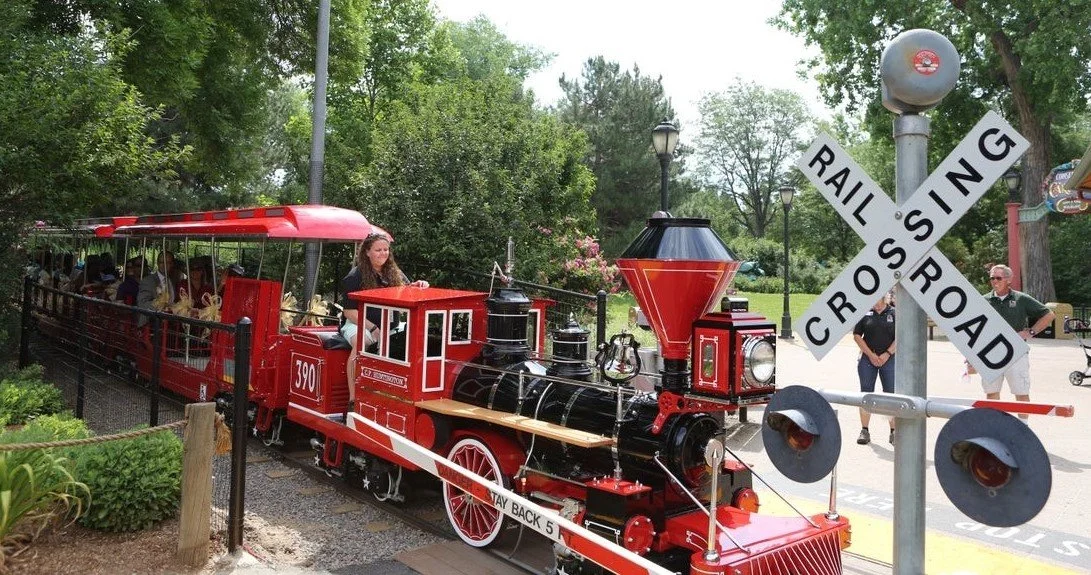
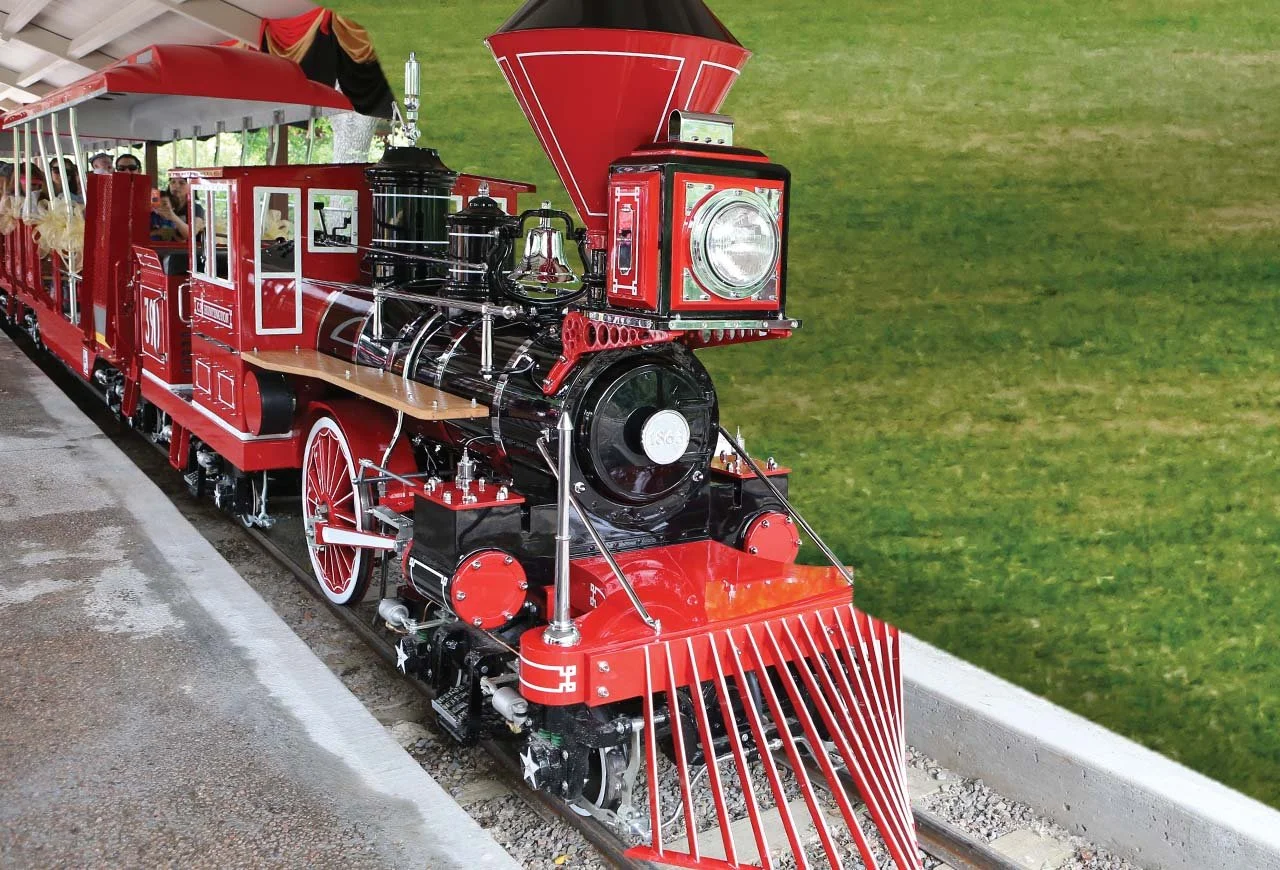
The zoo’s train presented a different challenge: the existing onboard sound system had failed and required immediate replacement to maintain safe operation.
We first developed a temporary solution—using a straightforward microphone, mixer, and amplifier configuration—to allow the train to operate safely while the permanent system was engineered.
The final system represents a significant upgrade. Using GPS-based triggers, the train now plays location-specific narration, animal sounds, and Spanish-language translations as it travels along the track. The route is divided into five distinct audio zones, including the depot with safety spiel, divided by pathway/railroad crossings, each with tailored content that enhances storytelling and orientation.divided by pathway/railroad crossings
A handheld paging microphone allows conductors to override programmed content for safety or live announcements. Critically, the system is designed to require minimal user input—standardizing the ride experience for quality assurance while allowing the engineer and conductor to focus on operating the train safely rather than managing audio playback.
Engineering the system required careful attention to environmental constraints. The train experiences constant vibration, high temperatures, and limited available DC power. To meet these demands, we specified roller coaster–grade playback equipment capable of withstanding harsh mechanical conditions while maintaining consistent performance.
Denver Zoo - Carousel and train
Client:
Denver Zoo