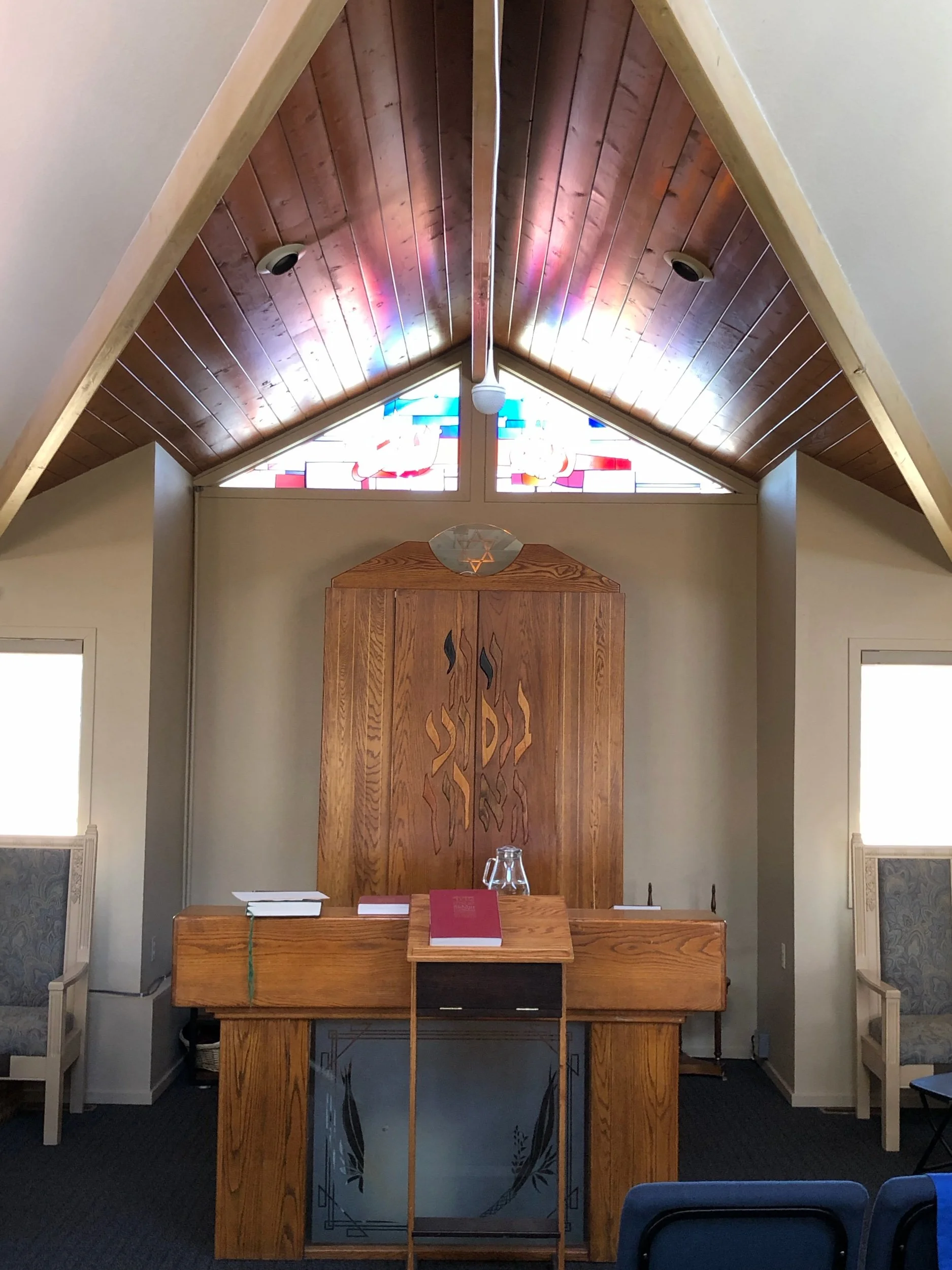
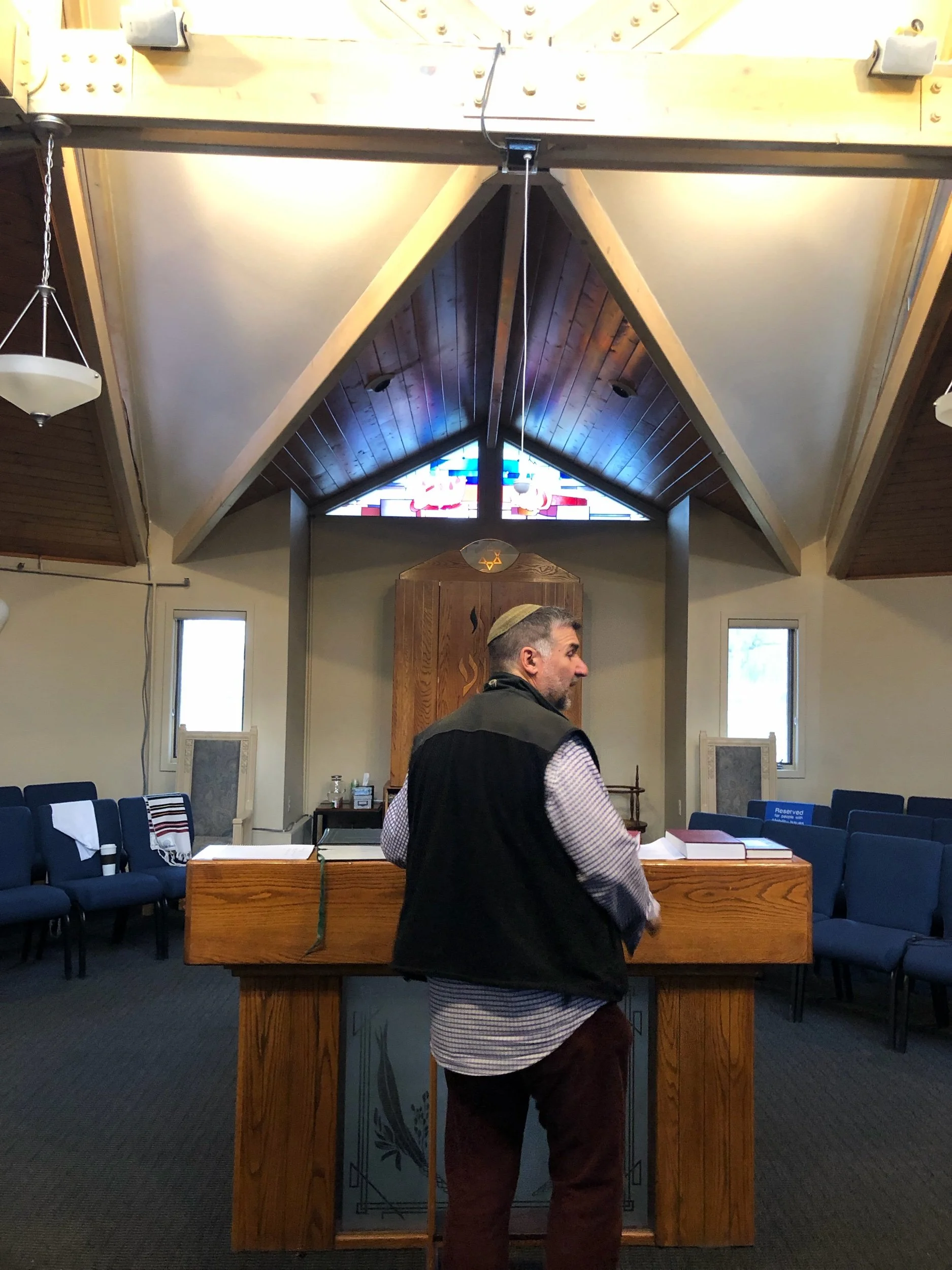
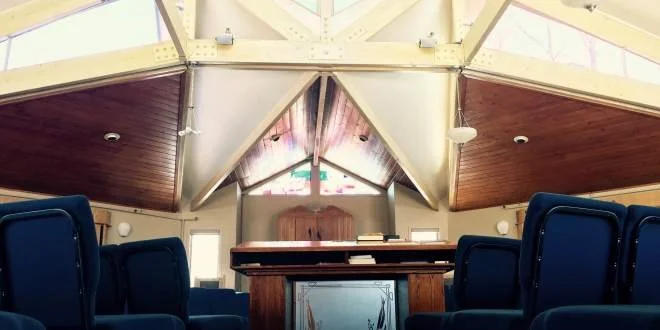
Bonai Shalom, a Conservative synagogue in Boulder, Colorado, engaged us to design a sanctuary audio system that would support worship, music, Torah reading, and community gathering with clarity, warmth, and discretion.
The sanctuary required balanced reinforcement for spoken liturgy from the bimah, cantorial music, congregational participation, and guest speakers. Speech intelligibility was essential, but the system also needed to preserve the natural intimacy of the room and remain visually unobtrusive around the ark and other sacred focal points. We designed a centralized DSP-based system and intuitive control—allowing clergy and staff to use the space, without requiring a technical operator for regular services and respecting the Jewish prohibition of operating electronics on Shabbat..
A key component of the project was the design of a cry room within the synagogue library. This space allows families with young children to remain connected to the service while providing flexibility and privacy. Audio from the sanctuary is routed seamlessly into the room, maintaining synchronization and clarity without drawing attention to the technology itself. Just as importantly, the controls in the cry room were intentionally designed for minimal interaction on Shabbat. Volume and source behaviors are preset to function automatically, reducing the need for physical adjustments during services while still giving staff appropriate control outside of observance hours. Through Q-SYS Administrator, services and events can be scheduled in advance, in addition to ad hoc commands triggered from iPad control interfaces when appropriate. This combination of automation and flexible control respects religious practice while maintaining operational simplicity.
During the COVID pandemic, we expanded the system with a suspended ambisonic microphone featuring 360-degree steerable pickup to enhance live streaming. This allowed the congregation to shape the listening perspective in software—capturing clergy, Torah readings, or room response without repositioning equipment. The system automatically mixes the audio, routes it to the streaming computer, and begins streaming on a scheduled basis.
The design anticipates future growth. Planned expansions include assistive listening solutions using RF and/or Auracast technology to improve accessibility. Additionally, the congregation is evaluating how the system electronics could be repurposed within a future building planned at the Boulder Jewish Commons—extending the life of the investment and aligning with long-term vision, budget, and sustainability goals.
Bonai Shalom
Client:
Bonai Shalom